Strategy  |  eCommerce  |  ReCommerce

Tag: ai

  • Product Cards – AI Agentic Commerce eCommerce Shopping and GEO / SEO

    Product Cards – AI Agentic Commerce eCommerce Shopping and GEO / SEO

    TL;DR — The Takeaway

    AI is changing how shoppers discover and compare products. A useful product card brings together the price, images, specifications, reviews, availability, and shipping details a buyer needs to make a decision. My message to eCommerce merchants: get your underlying product information right first. Better data benefits both human shoppers and the AI tools that may recommend your products.

    I’ve watched eCommerce evolve from fairly simple online listings into a world of marketplaces, sophisticated search engines, personalized recommendations and increasingly complicated buying decisions. Now we’re approaching another change: what happens when the customer asks an AI assistant to help shop instead of typing a few keywords into a search box?

    That question is what interests me about agentic commerce and something I’m calling attention to here: product cards. The term can sound technical, but the idea is straightforward. A product card is the compact presentation of the information somebody needs to understand and compare an item. It can be shown on a traditional marketplace, in a shopping search result or inside an AI-powered answer.

    I don’t believe every merchant needs to throw out their existing eCommerce strategy to prepare for this. In fact, many of the things that matter most in AI shopping are the same fundamentals good merchants should already be practicing: accurate inventory, useful descriptions, quality images, competitive offers and a trustworthy buying experience.

    From the Search Box to the AI Shopping Conversation

    For years, online shopping has largely started with the buyer searching, browsing, filtering and comparing. A customer looking for a desk chair might visit several sites, sort by price, read reviews and try to determine which chair is actually comfortable. Some people enjoy the hunt. Others would gladly hand most of that work to somebody else!

    With agentic commerce, a shopper might simply tell an assistant, “Find me a comfortable ergonomic chair for my home office for less than $300. It needs good lumbar support and should arrive next week.” The assistant could interpret those requirements, look across available product information, narrow the choices and explain why it selected them.

    This isn’t entirely theoretical. In late April 2025, ChatGPT began rolling out more visual shopping results that can show product photographs, prices, reviews and links to merchants. These early experiences are mostly about discovery and comparison; that is different from an AI assistant being authorized to complete every purchase autonomously. But it shows the direction shopping interfaces are heading. See TechCrunch’s April 28, 2025 coverage.

    What Exactly Is a Product Card?

    Think of a product card as a digital salesperson’s quick reference sheet. It should communicate what the item is, who it’s for, what makes it different and what it will cost the customer. The best cards make important facts easy to compare instead of forcing shoppers to hunt through an entire page for answers.

    Here’s a simple illustration of the concept from my original post:
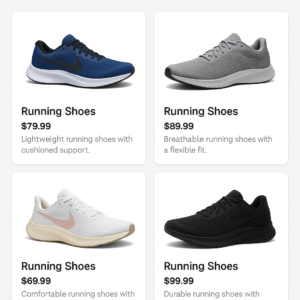
    agentic-commerce-product-card-example

    The card itself is the presentation, not necessarily a special file that every AI system reads in the same way. Different shopping platforms and AI tools may display products differently. The information behind those displays can come from a merchant’s product page, structured data, product feeds, marketplace records or other sources. That’s an important distinction because merchants control much of the information, but they won’t always control exactly how an AI interface displays it.

    For instance, a merchant might provide five excellent photos and a long description. A shopping assistant might choose to surface just one photo, a short summary, the current price and a couple of distinguishing features. If the underlying catalog information is incomplete, the assistant has less reliable material to work with.

    Seven Things a Useful Product Card Should Communicate

    Whether the card appears on a retailer’s website, a marketplace or an AI shopping interface, I’d focus on these essentials:

    • Product identity: A recognizable brand and product name, plus the model, size or variation when relevant. Make it obvious which item is actually for sale.
    • Clear, honest photos: Show the item accurately, from useful angles, and include details that help shoppers understand scale, fit, finish or condition.
    • Price and offer: Display the selling price and applicable promotion clearly. The final cost may also depend on shipping, taxes or other charges.
    • Useful specifications: Dimensions, materials, compatibility, weight, features and product identifiers can help distinguish a true match from a lookalike.
    • Ratings and reviews: Give shoppers context for customer feedback. A rating by itself is less useful if we don’t know how many people contributed or what they liked and disliked.
    • Inventory and delivery: A recommendation isn’t very helpful if the item is out of stock or cannot arrive when the customer needs it.
    • Return and warranty information: Especially for products with fit, performance or compatibility questions, clear policies can remove an important reason to hesitate.

    I would add one more principle that isn’t always visible on the card: the information needs to be consistent wherever the item is listed. A product that shows one price on the website, another in a marketplace feed and an outdated availability status in search creates confusion. In an AI-assisted shopping experience, bad data may be repeated at the very moment a customer is ready to buy.

    How an AI-Assisted Purchase Could Work

    Here’s the shopping journey I envision as these systems improve. Not every AI tool can perform all five steps today, and some purchases will continue to require direct customer approval.

    1. The shopper explains the need. They describe the budget, purpose, preferences and delivery requirements in ordinary language.
    2. The assistant discovers possibilities. It searches available product information and considers which listings meet the stated requirements.
    3. The assistant compares and explains. It presents a smaller group of products, perhaps with cards that highlight price, specifications, reviews and important tradeoffs.
    4. The shopper chooses. The customer reviews the recommendation and decides whether a product deserves a closer look or a purchase.
    5. Checkout and fulfillment follow. The customer may click through to the merchant to complete the order. More autonomous purchasing could develop with permission and suitable payment safeguards.

    What fascinates me is how this changes the work on both sides of the sale. The shopper might spend less time filtering through dozens of pages. The merchant might have fewer opportunities to win attention through clever navigation or a flashy homepage if the AI assistant has already narrowed the field before the shopper arrives.

    Why Product Cards Matter to eCommerce Merchants

    Visibility Starts With Relevant, Reliable Information

    Traditionally, merchants have worked hard to show up when someone searches for a product. That work doesn’t disappear. But an AI assistant may try to understand the shopper’s intent more precisely than a short keyword phrase. If somebody needs an office chair that fits a small apartment, the seat dimensions, adjustability and shipping size could all become relevant.

    My concern is that merchants sometimes treat product information as a chore. They enter the minimum necessary to get a listing live and move on. In a world of AI-assisted comparisons, thin product data may be a competitive disadvantage. Better information doesn’t guarantee a recommendation, but missing or inaccurate details certainly don’t help.

    Trust Still Determines Whether People Buy

    An AI assistant can make a recommendation, but the shopper still has to feel comfortable with the merchant and the item. Reliable pictures, clear terms, credible customer feedback and realistic delivery promises are all part of that confidence. This is especially important when the customer has never heard of the seller before.

    I think merchants should resist the temptation to write product descriptions entirely for machines. The real customer is still a human being. Your listing needs to answer practical questions in language someone can understand, even if an AI system is involved in discovery.

    Comparison Can Make Weaknesses More Obvious

    There is a downside to making comparison easier: shoppers may see more clearly when one offer costs more, delivers more slowly or provides less information than another. A product card can help a strong offer stand out, but it can also expose a weak one. That’s not necessarily a bad thing. It encourages merchants to compete on real value.

    Price isn’t the entire story. A dependable seller, a better warranty, clearer instructions or faster delivery might justify a higher price for the right customer. The goal should be to communicate what makes your offer worth choosing, not merely to stuff a card with keywords.

    SEO, GEO and Structured Product Data: How They Fit Together

    There’s already discussion about Generative Engine Optimization (GEO), or how businesses might become more visible in AI-generated answers. I think it’s worth paying attention to, but I wouldn’t declare traditional search engine optimization dead. Search engines, marketplaces and AI assistants may all use overlapping information, while choosing what to display in different ways.

    One practical place to start is product structured data. Standards such as Schema.org Product and Offer can help make details like a product’s name, price, availability and reviews more explicit to systems that support those formats. Google has long offered merchant listing and product-result features based in part on structured data. That does not mean every AI shopping assistant reads Schema.org in exactly the same way, or that markup guarantees visibility.

    A merchant’s website, product feed and marketplace listings should also agree on the basics. If the item is sold out, show that. If the price changes, update it. If a product comes in different sizes or colors, distinguish the variants correctly. You can review Google’s merchant listing structured data documentation for a practical starting point.

    My opinion? Don’t chase a mysterious AI optimization trick while your product data is a mess. Start with the information you can control and make it accurate, useful and consistent. Those improvements are good eCommerce practices even if the industry’s next preferred acronym changes.

    Five Practical Steps to Get Your Catalog Ready

    If I were reviewing a merchant’s catalog for this shift, I wouldn’t start by buying a complicated new tool. I’d start by checking the actual listings and customer experience.

    1. Audit your best-selling and highest-potential products first. Identify listings with incomplete titles, missing specifications, outdated prices, weak photos or confusing variations.
    2. Make product information specific. Describe what the item does, who it suits and any important limitations. Include model numbers, compatibility and attributes customers routinely ask about.
    3. Review your product feeds and structured data. Make sure eligible merchant listings accurately reflect price, inventory, shipping and other supported details.
    4. Improve the buying experience. Test product pages on mobile, review shipping promises and return policies, and make it easy to find answers before purchase.
    5. Measure what actually improves results. Watch product discovery, engagement, conversion, returns and customer questions. A better-looking card is useful only when it helps the business and the buyer.

    I’d also keep an eye on how AI shopping results are evolving. Try asking an assistant the kinds of questions your customers ask, then see what information it surfaces and what it leaves out. Use that as research into how your products are described—not as proof that one test reveals the rules of a secret ranking algorithm.

    My Take: Better Product Data Is a Business Asset

    I’ve seen eCommerce change plenty of times, and each wave of technology seems to arrive with a promise that everything will be different. Some parts really do change. But buyers still want the right item, a fair deal, dependable fulfillment and the confidence that they’ll get what they ordered. The tools for connecting buyers and sellers are what keep evolving.

    That’s why I’m interested in product cards. They make the next generation of shopping easier to picture. Instead of asking customers to work through endless listings, an assistant may do the first round of research and offer a clear, manageable comparison. Merchants that communicate product information clearly should be better prepared for that experience.

    I don’t think a beautifully formatted product card, by itself, is going to make anybody successful. The product has to be right. The information has to be right. The business behind the offer has to work. But as AI becomes part of the shopping process, getting those fundamentals right could matter more than ever.

    It’s still early in this transition, and we have plenty to learn about how customers will use AI to shop. That’s exactly why I think eCommerce merchants should be watching it now. What would an intelligent shopping assistant discover about your products today? And would you be happy with the answer?

    Further Reading

    ChatGPT’s April 2025 shopping updates — TechCrunch · Google Search Central: Product merchant listings


    Disclosure: AI helped create this article

  • GEO (Generative Engine Optimization): The AI-Driven Evolution Replacing SEO

    GEO (Generative Engine Optimization): The AI-Driven Evolution Replacing SEO

    TL;DR — The Takeaway

    GEO—Generative Engine Optimization—is about becoming visible and useful when AI answers questions instead of simply listing websites. This could change how shoppers discover businesses and products. My advice: don’t abandon SEO. Build on it with useful content, trustworthy reputation, accurate product information, and a better customer experience.

    For years, anybody selling products online has heard the same advice: get found in search. Search Engine Optimization—SEO—became part of the language of eCommerce. We learned to think about keywords, product titles, useful content, links, and how to get a prospective customer to click through to our store.

    Now something interesting is happening. Instead of searching and sorting through a long list of websites, shoppers can ask an AI assistant a fairly detailed question and receive an answer that brings information together from multiple sources. They might ask for an explanation, a comparison, or a product recommendation. What happens to SEO when the search engine starts answering the question itself?

    That’s why I’m paying attention to GEO, or Generative Engine Optimization. I think this change has the potential to reshape product discovery. But I wouldn’t turn off an existing SEO strategy tomorrow. We are seeing a new layer develop around search, and there is still a lot we don’t know.

    What Is Generative Engine Optimization?

    GEO is an emerging way of thinking about whether a business, website, or product is discoverable and useful in AI-generated answers. Traditional search engines have generally presented ranked links to pages. AI-powered systems may instead synthesize an answer, sometimes referencing the websites, brands, and sources they used.

    There is already research on this idea. The paper GEO: Generative Engine Optimization, first shared as a preprint in 2023 and presented at KDD in 2024, explores how creators can improve visibility in generative responses. It’s an interesting starting point, not a guarantee that any particular optimization will earn a recommendation from every AI service.

    For a merchant, imagine somebody asking: “What are the best walking shoes under $120 for someone who spends all day on their feet?” A traditional search might display shoe stores, reviews, articles and ads. An AI assistant could interpret the question, compare several choices, and explain which products might fit the need.

    This changes where an initial buying decision could happen. The customer still needs a good product and a trustworthy merchant, but they may not visit ten websites before narrowing the choices. Being understandable and credible in the information AI systems can find could matter as much as ranking for a short keyword phrase.

    Here’s the illustration from my original GEO article:

    GEO replacing SEO for ecommerce

    GEO Versus SEO: What’s the Difference?

    SEO focuses on helping search engines discover, interpret and rank website content. It includes useful pages, relevant language, links, clear site organization, technical accessibility and sound product information. Those fundamentals still matter.

    GEO asks a different question: When an AI system puts together an answer, what information does it use, and will our products or business be part of that answer? Instead of only measuring a position on a results page, we may need to think about whether information is understood, mentioned, cited or recommended.

    There is another important distinction: GEO is not exactly the same as agentic commerce. GEO concerns visibility in AI-generated discovery and answers. Agentic commerce involves an AI assistant helping a customer research, compare, or potentially buy a product with the customer’s permission. They can work together, but one is not a substitute for the other.

    We’ve already seen some movement. In March 2025, Google announced improvements to AI Overviews and an experimental AI Mode. In late April, ChatGPT introduced enhanced shopping results that can include product pictures, prices, reviews and direct merchant links. These are signs of changing discovery behavior, not evidence that regular search is gone.

    Why AI Discovery Could Change the Shopping Experience

    1. A Shopper Can Explain the Problem Instead of Guessing Keywords

    Someone shopping for an office chair might describe their budget, body size, workday and whether the chair needs to fit into a small apartment. An AI assistant can try to interpret the full request rather than matching only a few words. That’s useful to the buyer, but it demands more from the seller’s product information.

    An incomplete description that says “premium office chair” doesn’t tell the system much. Seat dimensions, weight rating, adjustability, return terms and shipping information are more helpful. Good information allows both people and software to make better comparisons.

    2. Product Comparisons May Happen Before the Merchant Gets a Click

    I think this could be one of the biggest changes for eCommerce merchants. We’ve spent years trying to get customers into our stores so we can explain why our products are worth buying. What if an AI assistant does the first round of comparisons before anybody visits the store?

    It doesn’t mean the merchant loses the chance to sell. It means the information used at that earlier stage may have a bigger impact. Inaccurate features, stale prices or unclear variations could create problems before the customer ever reaches the product page.

    3. AI Recommendations Still Have Limitations

    We also need to keep our expectations realistic. AI tools can misunderstand a request or display information that is out of date. Different assistants may rank or describe products differently. And in many of today’s shopping experiences, the customer still visits a retailer to complete the purchase.

    A merchant can’t force an AI assistant to recommend a product by adding a few keywords or installing a plugin. Our job is to improve the information and experience we control, not pretend there’s a guaranteed formula for AI rankings.

    Three GEO Priorities for eCommerce Merchants

    1. Clean, Structured and Up-to-Date Product Information

    I’d start with product names, model numbers, dimensions, materials, compatibility, sizes, colors, prices, availability, shipping promises and other practical details. If an item has several variations, identify them clearly. If a price changes, update it everywhere it appears.

    Structured data, such as Schema.org Product and Offer markup, can make supported product attributes easier for search systems to interpret. Google also provides merchant listing structured-data guidance. But structured markup doesn’t automatically qualify a product for every AI shopping tool, and it can’t make up for inaccurate inventory or poor descriptions.

    My take: Fix your catalog before buying expensive software to push the same bad catalog into more places! Clean data helps the website, the marketplace listing, the customer and potentially the AI assistant. It is a useful investment regardless of which interface wins.

    2. Reputation and Customer Trust

    The original article emphasized reputation, and I think that’s essential. Reviews, seller reliability, clear business information, shipping policies and honest descriptions all help a shopper decide whether to trust a merchant. If customers routinely complain that the product isn’t what was advertised, no amount of clever optimization makes that a good business.

    I wouldn’t fabricate reviews or try to game an AI tool’s trust signals. Instead, encourage authentic customer feedback, correct mistakes and communicate clearly. Trust is built through transactions, not simply through page formatting.

    3. Personalization That Helps Real People

    AI could allow shoppers to ask for a much more personalized recommendation. A buyer looking for hiking shoes might specify terrain, weather, fit, budget and a delivery deadline. Better product attributes can help match a specific need to a specific offer.

    But that doesn’t mean every seller needs an elaborate prediction engine collecting huge amounts of customer information. Sometimes personalization begins with explaining which product is best for beginners, which works for heavy use and which one costs less. Help the customer make an informed decision, whether an AI assistant is involved or not.

    Six Practical Steps I’d Recommend

    If I were reviewing a merchant’s GEO readiness today, I wouldn’t begin with an expensive new platform. I’d look at the actual product information and the questions buyers ask.

    1. Audit important product listings. Check your best-selling and high-potential products for missing details, weak images, ambiguous names and incorrect prices.
    2. Answer real customer questions. Explain intended use, fit, compatibility, limitations, delivery times, warranties and returns.
    3. Make product data consistent. Compare the website with product feeds and marketplace listings, including variation and stock information.
    4. Use supported structured data. Apply product markup where appropriate, validate it, and continue the normal technical SEO work.
    5. Strengthen genuine credibility. Make policies clear, offer good service and encourage honest customer feedback.
    6. Experiment and measure. Ask AI shopping tools the kinds of questions customers might ask, then monitor whether improving the underlying content also helps discovery and sales.

    I would still spend time on titles, useful page copy, internal links, fast pages and other established SEO practices. We don’t have to choose between basic SEO and GEO. The best improvements often help both.

    Is GEO Really Replacing SEO?

    My headline is intentionally bold because I believe we’re looking at a meaningful change in how customers will discover products. For decades we’ve helped shoppers find links. Now AI services may begin helping them get answers, compare choices and move toward purchasing.

    But I don’t think we can declare SEO dead in May 2025. AI systems still need sources of information, and ordinary search remains a major way customers find businesses. GEO is better understood as a new discovery challenge building on the foundations of SEO, not a reason to abandon them.

    The opportunity is to become the kind of merchant whose products are easy to understand and whose information can be trusted. If the product is wrong, the price is inaccurate or fulfillment is unreliable, being mentioned by an AI won’t fix the underlying business.

    The Opportunity I’m Watching

    What interests me most is the possibility that a shopper will describe a problem in plain English and receive a useful shortlist of products rather than a thousand links to sort through. That could make shopping easier, and it could create opportunities for merchants whose products meet specific needs but don’t have the biggest advertising budgets.

    It could also create new challenges. If an AI narrows the shopping decision before a consumer visits your store, product attributes, accuracy and reputation may become more important than ever. We should be watching closely and learning from what the tools actually do.

    My advice: stay curious, keep experimenting and don’t neglect the fundamentals. The tools are changing, but customers still want the right product, a fair price, dependable delivery and a seller they trust. Would an AI assistant find enough accurate information about your products to recommend them confidently? That’s the question I’d start asking.

    References and Further Reading


    Disclosure, AI helped create this post

  • ChatGPT will Buy Your Items for You – eCommerce Shopping Agentic Commerce

    ChatGPT will Buy Your Items for You – eCommerce Shopping Agentic Commerce

    TL;DR — The Takeaway

    AI assistants are beginning to change how people shop. In May 2025, ChatGPT can help discover and compare products, but its new shopping results still direct buyers to merchants to complete purchases. I believe more capable agents will eventually handle more of that work. For merchants, the preparation starts with accurate product information, trusted offers, and profitable fulfillment.

    What if you could tell ChatGPT what you wanted to buy, give it a budget, and let it handle most of the shopping? No bouncing between a dozen websites. No trying to remember which store had the best shipping offer. Just a conversation about what you actually need.

    That’s the direction I find exciting about agentic commerce. I’ve watched eCommerce grow from relatively simple listings and search boxes into sophisticated marketplaces that know a remarkable amount about what shoppers want. AI could be another major step in that evolution—because the customer may eventually delegate more of the work instead of doing every comparison personally.

    My headline says ChatGPT will buy your items for you, and I chose that future tense deliberately. As of May 9, 2025, ChatGPT has newly expanded shopping search results, but it does not routinely complete checkout inside ChatGPT. Customers are still sent to a merchant’s website to finish purchasing. The big opportunity is where this process might go next.

    ChatGPT ecommerce agentic commerce shopping

    What Agentic Commerce Actually Means

    Agentic commerce describes shopping tasks performed with help from AI agents that can interpret a goal, take steps toward it, and potentially act on a customer’s behalf. It goes beyond simply displaying search results. A shopper can explain the outcome they want, and the system can do some of the research, comparison, and decision support.

    Imagine asking, “Find me a reliable laptop for travel, under $1,000, with good battery life. I need it delivered before Friday.” A traditional search engine might hand back pages of laptops and reviews. An AI assistant could help narrow that group using the stated requirements, point out compromises, and show a manageable set of options.

    It’s useful to separate shopping assistance from autonomous purchasing. Finding an item, comparing offers, and preparing a recommendation are different from receiving permission to spend money. Payment authority, privacy, returns, seller reliability, and confirming the exact item all become more important as AI systems move closer to checkout.

    What ChatGPT Shopping Can Do in May 2025

    On April 28, OpenAI introduced shopping enhancements to ChatGPT Search. Customers asking about categories such as fashion, beauty, home goods, and electronics can receive visual recommendations with product photos, review information, prices, and links to retailers. The rollout provides a much richer experience than a plain conversational answer.

    What it doesn’t mean is that ChatGPT is already negotiating every deal or independently placing purchases. Reporting at launch makes clear that the actual transaction still happens on the merchant’s website. That’s a crucial distinction. We should be excited about what’s emerging without pretending the entire future has already arrived.

    I think the real change is how the question is asked. A customer can explain a complicated need in ordinary language instead of figuring out which keywords will produce the right result. That gives the assistant more context to work with, and it puts a premium on useful information about products.

    A Shopping Journey That Could Become Very Different

    Here’s how I see this developing. The customer starts by describing the problem or desired outcome, not necessarily a specific item. The AI assistant uses available information to evaluate options, then presents a smaller group with reasons for each recommendation. The shopper can ask follow-up questions or change the budget without starting again.

    • Discover: Identify products that genuinely match a shopper’s needs, budget, and constraints.
    • Compare: Look at specifications, reviews, delivery promises, and total cost instead of just a promotional headline.
    • Recommend: Explain the tradeoffs—why one product is a better value and another may be worth paying more for.
    • Confirm: Let the customer inspect the exact variant, seller, availability, price, and return terms.
    • Purchase: Eventually, with proper permission and safeguards, an agent might help complete checkout and handle follow-up tasks.

    I can imagine the convenience of an assistant also watching an order, asking for an exchange if the size is wrong, or handling a routine reorder. But those are potential future workflows, not features I’m claiming are all available today. The more responsibility we hand to an assistant, the more the customer must remain in control.

    Could AI Negotiate Better Prices?

    One idea I explored in the original article is agents negotiating with retailers or identifying the best deals automatically. It’s certainly interesting to imagine a buying agent and a selling agent discussing a bulk discount or an acceptable substitute. But as of May 2025, that isn’t a universal ChatGPT shopping capability.

    The practical part is closer to home: an assistant may help compare advertised prices and understand the total delivered cost. That can already change how merchants compete. A $49 product with a $15 shipping fee may not look so attractive next to a $54 product with reliable delivery included.

    My take: I’ve always believed the economics matter at the transaction level. A clever AI shopping experience won’t rescue a seller who doesn’t understand product margin, shipping, fees, and returns. AI may make comparisons more transparent, and that makes knowing your numbers even more important.

    What Happens to Online Advertising and Product Discovery?

    Here’s where merchants should be paying attention. We’ve spent years buying search ads, optimizing product pages, and working to get shoppers onto our websites. What if the first meaningful product comparison now takes place inside an AI conversation rather than on our own storefront?

    I wouldn’t declare search advertising or SEO dead. Those channels still matter. But a conversational shopping assistant may rely on product specifications and customer needs that don’t fit neatly into a few traditional keywords. A retailer needs to make it easy for systems and shoppers to understand what a product actually does.

    That means accurate product names, variations, dimensions, features, images, prices, availability, reviews, and shipping information. Structured product data and reliable product feeds can help compatible search and shopping systems interpret those details. None of that guarantees inclusion in an AI response, but it improves the underlying information a recommendation might use.

    Three Things I’d Ask Every eCommerce Merchant to Review

    • Is our product information complete? If a customer needs an ergonomic chair for a small office, can our product listings actually explain dimensions, support, materials, and delivery options?
    • Does the offer inspire confidence? Clear policies, honest photographs, useful customer feedback, and accurate inventory matter regardless of who recommends the item.
    • Can we profitably deliver the promise? If an assistant highlights our product as the best choice, can we ship it on time and handle the transaction, service, and potential return without losing money?

    I would also test how existing AI shopping tools respond to real questions your customers ask. Don’t treat one answer as proof of some secret ranking formula. Use it to learn which parts of your catalog are understandable and which leave important questions unanswered.

    The Merchant Still Has to Win the Customer

    One thing I don’t want to lose in the excitement over autonomous shopping is the human side of the transaction. Somebody still has to trust that the product is what it claims to be. Somebody still has to receive it, use it, and decide whether the experience was good enough to buy again.

    AI might become the front door to a purchase, but the merchant remains responsible for the promise behind that purchase. A good description, a fair price, reliable fulfillment, and responsive service are just as relevant if the buyer arrives through an AI recommendation instead of a search engine.

    To me, that is the exciting part of this shift. The interface can change dramatically while the fundamentals of running a good eCommerce business remain recognizable. The opportunity is to make those fundamentals easier for customers—and their assistants—to see.

    My Take: Prepare for the Direction, Not Just Today’s Features

    I think we’re looking at the beginning of something important. As AI becomes more capable, shopping could become less about finding products and more about describing the result we want. That may help buyers discover good merchants they would never have found through an ordinary keyword search.

    But I’m not ready to tell sellers that ChatGPT will magically handle every order next week. There are legitimate questions about accuracy, authorization, payments, privacy, and the ability to resolve a problem after checkout. Those are business challenges, not just technical problems.

    My advice is to start with what you control. Build better product data, understand your customers, and make sure each order is economically sound. If an AI assistant eventually decides which products to recommend—and perhaps which orders to place—would your business be ready to earn that sale?

    Sources and Further Reading

    WIRED — OpenAI adds shopping to ChatGPT, April 28, 2025 · Search Engine Land — ChatGPT Search shopping features, April 28, 2025


    Disclosure, AI helped write this article

  • Sell the “Best” – eCommerce SEO for Agentic Commerce

    Sell the “Best” – eCommerce SEO for Agentic Commerce

    TL;DR — The Takeaway

    “Best” is a powerful shopping word because it signals a decision. There are two layers to winning the word “best.” First, shoppers constantly ask Google, voice assistants and AI to “find the best.” If your product doesn’t appear in credible search results, reviews and comparisons, the AI may never discover why it belongs on the shortlist. Second, “best” becomes personal: the ideal product depends on the buyer’s needs. Earn the visibility, then prove the fit.

    Think about how often shoppers search for the word best. Best laptop. Best running shoes. Best coffee maker. Best place to stay. It’s a small word, but it’s an important signal: somebody is moving beyond browsing and trying to make a decision.

    Think about the way people actually search. Sitting at a computer, looking at a phone or talking to a voice assistant, how often does the request sound like this: “Find me the best pair of shoes.” “What’s the best office chair?” “Show me the best coffee maker.” They don’t necessarily know a brand or model number. They start with that one little word: best.

    That’s my first point, and I think it’s a big one. If your product isn’t discoverable in the places a shopper—or the AI doing research for that shopper—looks for evidence of what’s best, how will it make the list? Once an assistant identifies possible choices, a second question becomes important: best for whom? Both layers matter.

    Here’s the opportunity I see for eCommerce sellers and publishers: become one of the products customers and AI tools can actually find when they ask for the best, and then provide a convincing reason that your offer is best for the right buyer. Calling yourself the best isn’t enough. You need visibility and evidence to back it up.

    best seo for agentic commerce

    Why “Best” Has Always Been a Valuable Search Term

    In traditional SEO, “best” often signals commercial investigation. A shopper using that word may be comparing products before purchasing rather than just looking for a definition. That’s why review sites and comparison articles have attracted attention around queries like “best affordable cameras” and “best office chairs.”

    But this word has also created a crowded content category. Search for almost anything and you’ll find a site promising its “Top 10 Best” choices, sometimes with little explanation of who did the testing or what qualifications the author has. Just because a page ranks well—or contains the keyword—doesn’t automatically mean its recommendation deserves trust.

    As someone who’s spent years thinking about how products get sold online, I find the purchase intent interesting. But I’d caution sellers against mistaking a popular word for a complete strategy. The word attracts a question. The content has to answer it.

    Layer One: When People Search for the “Best,” Will AI Find You?

    My original theory is simple: people use the word “best” as a shortcut when they’re ready for help choosing. It’s a natural request, especially when someone is using voice search or asking an AI assistant a question. They may not want a hundred alternatives; they want someone to narrow the field.

    For years, search engine optimization has helped businesses and publishers appear when somebody asks for the best product in a category. Strong product pages, helpful comparison content, independent reviews, relevant links and credible mentions all contribute to a brand’s visibility. If you sell office chairs but nobody reviewing chairs mentions yours, and your own pages provide little evidence of quality, an assistant doing product research may have fewer reasons—or fewer opportunities—to consider you.

    This is the first layer of the challenge: you have to be part of the information ecosystem that answers “what’s best?” The goal isn’t to place the word “best” in every product title. It’s to make the product genuinely discoverable through useful SEO content, honest customer reviews, accurate product data and independent comparisons where relevant.

    I would pay particular attention to what people see when they search for your product category. Are credible publications comparing the products? Are customers reviewing them? Is your own website answering the questions buyers ask? Do your claims match the product’s actual performance? If an AI agent can’t find dependable signals about your product, it may overlook a perfectly good offer. That’s a commercial risk worth thinking about—even though no one can promise how a given AI assistant will choose its sources.

    Layer Two: What Does “Best” Mean for This Particular Buyer?

    If you ask an assistant for the best office chair, the first useful answer might actually be another question: “Best for what?” Long hours at a desk? Back support? A small space? A $250 budget? The same chair won’t be the right fit for every person.

    That’s a meaningful shift from chasing a generic number-one ranking. A shopper can add details in natural language, and the assistant can compare products against those criteria. A merchant who provides accurate dimensions, material, adjustability, warranty, delivery, and return information gives a system more to work with.

    In late April 2025, ChatGPT began rolling out enhanced shopping results with product images, prices, review information, and links to merchants. It’s still early, and those features don’t establish a universal formula for how assistants select recommendations. But they show why clear, comparable product information could become increasingly valuable.

    My take: First we have to get our products into the conversation. Then we have to give the AI enough information to understand the individual buyer. Best value? Best fit? Best durability? Best for a beginner? Visibility gets you considered; relevance gives you a chance to be chosen. I would rather show why an item is the right match than pretend it’s the best for everybody.

    The Opportunity—and the Problem—with “Best Of” Lists

    Comparison publishers such as Wirecutter and CNET have built audiences by helping people select products, while affiliate-driven sites can earn commissions when readers buy through their links. Some of these guides involve extensive research or hands-on testing. Others don’t. That difference matters.

    An AI assistant evaluating a purchasing question might find comparison articles useful because they summarize specifications and tradeoffs. But we shouldn’t assume every assistant favors pages with “best” in the title or automatically treats all affiliate guides as authoritative. The actual selection methods differ by platform and aren’t fully public.

    And there is a credibility issue. If a page is designed mainly to collect affiliate commissions, the recommendation may be influenced by the economics of the publisher rather than the needs of the shopper. That doesn’t mean all affiliate content is bad. It means the research, testing, disclosures, and reasoning ought to be clear.

    Personally, I’d be more impressed by an article that says “Here are the three products I’d consider, and here’s who each one is for” than by a list of ten products with identical five-star descriptions. A useful comparison explains tradeoffs, not just winners.

    How Merchants Can Earn a Place in Better Recommendations

    The original article explored how retailers might optimize for “best” searches, and I still believe that’s a valuable opportunity. I’d approach it from both sides: be visible and credible when a shopper asks for the best, then make sure your information demonstrates who the product is best for. That is more useful than trying to reverse engineer a secret AI ranking formula.

    • Describe the actual customer. Explain the scenarios a product serves well and where it may be a poor fit. “Best for a small apartment” is far more specific than “best chair.”
    • Publish accurate product details. Dimensions, compatibility, materials, size charts, price, stock, and shipping information help both people and software compare options.
    • Make evidence visible. If you publish a comparison, explain your criteria, how you evaluated the products, and any limitations in your research.
    • Show credible feedback. Real reviews and useful customer questions may reveal strengths and weaknesses more clearly than marketing copy.
    • Earn credible third-party attention. Encourage genuine customer feedback and make it easy for legitimate reviewers and comparison publishers to understand your product. Disclose paid placements, affiliate commissions, free samples, and other material connections where appropriate.
    • Maintain the basics. Clear page structure, useful headings, internal links, mobile performance, and supported structured data remain valuable for search and shopping.

    Structured markup can help compatible search systems interpret a product or review, but adding it doesn’t guarantee a recommendation. Likewise, getting an article linked from a respected site can help readers discover it and support traditional SEO, but it would be misleading to promise that an AI agent treats every backlink as a direct vote.

    What I’d Change About a Typical “Best Products” Article

    Suppose you sell outdoor equipment and want to publish a guide called “Best Camping Stove.” I’d start by defining the categories: best for backpacking, best for family camping, best budget choice, and perhaps best for cold weather. Then I’d explain the criteria behind those selections.

    Weight, fuel availability, cooking speed, safety, price, and durability might matter. I’d also include honest limitations. A tiny lightweight stove might be perfect for one person hiking, but a poor recommendation for a family cooking dinner at a campsite.

    That approach creates something valuable for readers today and potentially useful information for conversational search tomorrow. A shopper who asks an AI assistant for a small stove to cook for four people is describing a specific problem. The more clearly a merchant or publisher answers that problem, the better.

    One more thing: if you haven’t actually tested a product, don’t imply that you have. Credibility is an asset worth protecting, especially when shoppers are already questioning how much online content is written to rank instead of written to help.

    SEO, AI Shopping, and the Difference Between Visibility and Sales

    There’s a temptation to make every new development sound like the end of the previous one. I don’t think that’s the most useful way to run a business. Traditional SEO is still important in May 2025. AI-driven discovery may add another way people find and compare products.

    Even if a merchant appears in an AI recommendation, there is more work to do. The item needs to be in stock, accurately described, fairly priced, and shipped as promised. The customer has to trust the seller. A recommendation that produces a disappointing transaction doesn’t make for a healthy business.

    So I would measure more than rankings or mentions. Are the right shoppers discovering the products? Are they converting? Are they returning items because expectations weren’t clear? Is there enough margin left after advertising, fees, shipping, and customer support?

    I’ve always found that the numbers behind a sale matter. Winning attention is useful. Winning a profitable, satisfied customer is better.

    My Take: Sell the Best Answer, Not Just the Word “Best”

    The word “best” isn’t going away. People will keep asking phones, search engines and AI assistants to find the best products because it’s a natural way to shop. My original point is that merchants need to be visible in the search results, reviews and trusted comparisons that help answer that question. If your product is invisible to the sources a shopping assistant consults, it may never enter the conversation.

    The second layer is where AI could become genuinely useful. Instead of asking what’s best in general, the shopper can say what’s best for me—my budget, my preferences, my delivery deadline. Merchants can prepare by being exceptionally clear about the people an item serves and the tradeoffs involved. Publishers can help by making their comparisons fair, specific and useful.

    That’s the two-layer opportunity: become discoverable when people ask for the best, and give an AI assistant the evidence to determine when you’re the best fit. If somebody asks for the best product in your category today, does your business even show up in the places that answer the question? And if it does, is there enough useful information to justify recommending it?

    Further Reading

    Search Engine Land — ChatGPT shopping search launches, April 28, 2025 · FTC — Endorsements, reviews, and influencer guidance


    Disclosure: AI helped generate this blog post.

  • Agentic Commerce: Revolutionizing Online Shopping with AI

    Agentic Commerce: Revolutionizing Online Shopping with AI

    TL;DR — The Takeaway

    Agentic commerce could change online shopping from searching and clicking to asking and delegating. AI can help shoppers describe a need, compare products and narrow their choices. In May 2025, fully autonomous purchasing is still largely a direction rather than the standard experience. For merchants, the opportunity begins with accurate product information, honest value, reliable fulfillment and a trustworthy business worth recommending.

    I’ve been involved in eCommerce long enough to remember when online shopping was largely about finding a listing, studying a few photographs and deciding whether to trust the seller. Today we have enormous marketplaces, sophisticated recommendations and more choices than most shoppers can reasonably evaluate.

    Now another change is taking shape. What happens when the customer doesn’t have to do all the searching? What if they can explain what they need to an AI assistant and let that assistant do much of the research? And what happens when the assistant eventually becomes capable of taking certain actions on the shopper’s behalf?

    That’s the opportunity I see in agentic commerce. The technology is exciting, but I want to look at it from both sides of the transaction: what it means for the customer and what it might mean for the people selling, shipping and standing behind the merchandise.

    agentic commerce for online sellers

    What Is Agentic Commerce?

    Agentic commerce describes using AI agents to help accomplish shopping tasks on behalf of a customer. A shopper expresses a goal, the agent works through steps toward that goal, and—with the appropriate permission—could eventually help take actions. That’s more capable than a traditional recommendation engine that simply suggests an item because other shoppers bought it.

    For example, somebody might ask an assistant to find a carry-on suitcase under $180 that meets a particular airline’s size rules, has durable wheels and can arrive before a trip. Instead of showing hundreds of suitcases, the AI could compare measurements, reviews, prices and shipping promises and help narrow the choices.

    There’s an important distinction between assisting a purchase and making a purchase. Finding useful options isn’t the same as receiving permission to spend money or manage an account. Accurate checkout, privacy, payment authorization and returns become significant issues as more of that responsibility moves to software.

    We can already see an early example. On April 28, 2025, ChatGPT began rolling out visual shopping results with photographs, prices, review information and links to merchants. Customers still go to retailers’ websites to complete their purchases. That is a meaningful step in discovery—not proof that fully autonomous shopping has already become commonplace.

    Four Ways AI Could Transform the Shopping Experience

    1. Personalization That Starts With the Customer’s Actual Problem

    Traditional search can be limited by the words people think to type. A customer might search for “best office chair,” even though they really need a chair for a small desk, a long workday, a specific budget and delivery next week. An AI conversation can include all those requirements, and perhaps ask follow-up questions.

    I find that especially interesting because customers aren’t always shopping for a product; they’re trying to solve a problem. If an assistant can understand the problem better, a merchant with an appropriate product may have a better chance of being considered.

    2. Better Comparisons With Less Browsing

    Think about buying a laptop. You could spend hours sorting through specifications and reviews, with a dozen browser tabs open. An assistant could help identify a smaller group, explain tradeoffs and clarify which models meet the requirements.

    But an AI comparison is only as reliable as the information behind it. Prices change, a particular configuration may be unavailable, and reviews don’t always tell the whole story. A fast answer isn’t necessarily an accurate answer. The final details still deserve a look before purchasing.

    3. Better Pricing Research—and Perhaps Future Negotiations

    The original article explored the possibility of AI agents negotiating with retailers or finding personalized offers. That’s a fascinating direction. Imagine a buying assistant identifying bulk discounts, comparing bundled offers or interacting with a seller’s pricing system.

    As of May 2025, I wouldn’t describe autonomous agent-to-agent negotiation as a routine shopping feature. For most customers, the more practical opportunity is comparing publicly available prices and factoring in delivery costs. A $49 product with expensive shipping might not be a better deal than a $55 product delivered reliably.

    My take: The best deal isn’t always the lowest sticker price. Product quality, warranty, seller credibility, shipping and returns can change the equation. And on the seller’s side, even the cleverest pricing algorithm can’t rescue a transaction that loses money.

    4. Automation of Routine and Post-Purchase Tasks

    I can envision an assistant helping with repeat orders, subscriptions, shipment tracking or the first steps in a return. These are the routine jobs that can consume time without adding much value for the person doing them.

    But customers must be able to set limits and correct mistakes. An AI ordering the wrong size every month wouldn’t be much of an improvement! Delegating a task shouldn’t require giving away control.

    Four Priorities for Online Sellers

    1. Product Data and Transparency

    If an AI is comparing products, it needs usable information. Product names, model numbers, dimensions, colors, materials, variations, compatibility, prices, availability and shipping information all become important. Clear photographs and genuine customer reviews can help answer questions a short description might miss.

    A replacement auto part is a good example. The customer needs to know which models it fits and what happens if it doesn’t work. A listing that says “premium quality” isn’t much use when the buyer needs precise compatibility. The same problem exists with furniture, apparel and electronics.

    Structured data and product feeds can help compatible systems read some of those attributes. But there’s no universal magic AI tag that guarantees a recommendation. Clean, useful catalog information is where I’d begin.

    2. Pricing That Makes Financial Sense

    The original discussion anticipated more dynamic pricing, and I think sellers should understand the possibility. AI comparison tools may make it easier to spot when one merchant offers a higher price, slower delivery or less value than another.

    Still, I wouldn’t assume every merchant needs an AI-driven pricing engine right now. Before automating the selling price, understand the underlying costs: inventory, fees, packaging, shipping, customer support and returns.

    My take: Know your transaction-level profit before letting software change the price. It’s entirely possible to win more orders while earning less money if an automated tool keeps chasing the lowest price.

    3. Reliable Systems and Fulfillment

    An AI assistant may confidently recommend an item based on a price and delivery date that aren’t accurate anymore. Merchants with disconnected inventory and fulfillment systems can create a bad customer experience before the order is even placed.

    Over time, AI agents may interact with merchant systems through product feeds, APIs or other secure integrations. That will be important. But I wouldn’t tell a small business to build a complicated new interface before fixing the systems it already uses.

    Keep stock synchronized, checkout dependable, delivery commitments realistic and customer service able to resolve a problem. The operation behind the website still has to deliver what the technology promises.

    4. Marketing When the AI Helps Choose the Shortlist

    We’ve spent years trying to attract visitors through search engines, marketplaces, advertising and social channels. What happens if an AI assistant helps a buyer decide which three products to consider before the shopper ever visits a store?

    That could change where product visibility matters. I wouldn’t declare traditional SEO or advertising obsolete, but I would focus on what helps shoppers and their assistants recognize a relevant offer: useful pages, precise attributes, authentic reviews, good descriptions and a credible business.

    My take: The goal may become less about a clever keyword and more about earning a place in the customer’s consideration set. Merchants should be curious without pretending that anyone has a guaranteed formula for how every AI agent ranks products.

    Trust and Control Matter More as Automation Grows

    It’s easy to imagine the convenience of saying, “Find this for me and buy it.” It’s also worth thinking about what happens if the assistant selects the wrong size, misunderstands a requirement, chooses an unreliable seller or spends more than the customer intended.

    Payment authorization, privacy, clear return terms and transparent recommendations aren’t minor details. They are essential to the customer’s willingness to trust an automated buying process. How does an assistant distinguish a trustworthy recommendation from an ad? Who resolves a dispute? Can the customer verify the total delivered cost before authorizing a purchase?

    Those questions don’t disappear when the technology gets smarter. In fact, the more an agent does, the more important the boundaries become. Trust isn’t a decorative feature. It’s part of the commerce infrastructure.

    Five Things I’d Do to Prepare an eCommerce Business

    • Audit the product catalog. Check the most important listings for accurate names, specifications, variants, prices, stock, photographs and delivery terms.
    • Answer actual customer questions. Explain who the product is for, what it does, how it compares with alternatives and which limitations buyers should know.
    • Build credible reviews and clear policies. Encourage authentic feedback and make returns, warranties and support easy to understand.
    • Measure the whole transaction. Know the costs of merchandise, platform fees, fulfillment, shipping, service and possible returns before chasing the lowest price.
    • Experiment with the tools available today. Ask AI shopping assistants the questions real buyers might ask and see what information appears. Treat the results as research, not proof of a secret ranking algorithm.

    I would also keep watching announcements such as ChatGPT’s April shopping update and how customers respond. Some new interfaces will succeed and others may disappear. Improvements to catalog quality, operations and customer trust will remain useful either way.

    My Take: The Shopping Interface Changes, but the Seller Still Has to Deliver

    From early marketplace listings to today’s personalized shopping experiences, the tools of eCommerce keep changing. Agentic commerce could make the journey from a customer’s question to a completed order far more convenient. That’s a meaningful opportunity for both shoppers and sellers.

    But somebody still needs to source a good product, represent it honestly, deliver it as promised and stand behind the sale. AI might eventually do much of the research or help execute an authorized purchase. It won’t turn a bad product or a broken business model into a good one.

    I’m enthusiastic about the direction, but I don’t think the answer is to throw away everything we know about selling online. Build better data, understand your customer, protect profitability and make the buying experience dependable. Those steps position a merchant to benefit from new shopping technology without betting the business on a prediction.

    Here’s the question I would put to any online seller: If a customer asked an AI assistant to find the right product in your category, would your business give that assistant a good reason to choose you?

    Sources and Further Reading

    WIRED — OpenAI adds shopping to ChatGPT, April 28, 2025 · Search Engine Land — ChatGPT shopping features, April 28, 2025


    Disclosure: AI helped generate this blog post.

  • What Is Agentic Commerce? eCommerce Buying Online – Automated

    What Is Agentic Commerce? eCommerce Buying Online – Automated

    TL;DR — The Takeaway

    Agentic commerce is the idea of letting an AI assistant handle more of the shopping process for you. It could learn your preferences, compare products, prepare purchases and help with delivery or returns. But as of May 2025, the most ambitious fully autonomous buying scenarios are still developing. The real opportunity is convenience with clear customer permission, accurate information and control over the final decision.

    How much time do we spend shopping for things we already know we need? Dog food, coffee, household supplies, birthday presents, replacement parts. We search, compare prices, check the delivery date, read reviews, and eventually make a decision. Then we repeat much of the process the next time.

    That’s why agentic commerce has my attention. What if, instead of doing every step ourselves, we could tell an intelligent assistant what we need and let it take care of the research? What if we could eventually give it permission to handle certain routine purchases, while still setting the budget and the rules?

    I’ve watched eCommerce evolve through a lot of changes, but this one is interesting because it could shift some of the work from the shopper to software. Let’s look at how that might work, what exists today, and what I’d want to be careful about before handing an AI the company credit card—or even my own!

    agentic commerce shopping

    What Is Agentic Commerce, Exactly?

    Agentic commerce means using an AI agent to work toward a shopping goal on a person’s behalf. Instead of just showing a list of search results, the assistant can understand a request, investigate options, explain tradeoffs and potentially take additional actions if it has the right tools and permission.

    Here’s a simple example. You regularly buy a particular dog food, and your dog has a specific dietary requirement. Rather than remembering to reorder it every month, you might ask an assistant to watch your supply, compare available offers, and remind you when it’s time. A more capable future agent could place an order after checking the product, price and delivery window against rules you’ve approved.

    There is an important distinction between recommending and purchasing. In late April 2025, ChatGPT started rolling out richer shopping results, including product images, prices, reviews and links to retailers. Those links take shoppers to merchants to buy. That’s a real example of AI-assisted discovery, not a claim that ChatGPT routinely completes all purchases itself today.

    The bigger vision goes beyond finding an item. I think about it as a four-step journey: learning what matters to you, researching the market, taking an authorized action, and managing what happens afterward.

    Step 1: Teaching the AI Agent About You

    Before an assistant can be helpful, it needs to understand what you actually want. That doesn’t necessarily mean handing it unlimited access to your financial records or buying history. It can start with a few preferences you choose to provide.

    • Product preferences: Brands you like, items you regularly buy, sizes, compatibility requirements and features you care about.
    • Budget and value: Spending limits, whether you prioritize the lowest price or the best overall value, and whether faster delivery is worth extra money.
    • Timing: How often you need a refill or when something must arrive, such as a gift before a birthday.
    • Restrictions: Dietary needs for pet food, product allergies, merchant preferences or a rule that certain purchases always require approval.

    The original idea included AI learning from purchase histories, conversations and calendars. That’s one possible direction if the customer explicitly connects those sources, but we shouldn’t assume every agent automatically has that information. Permission and privacy ought to be part of the design, not an afterthought.

    My take: The advantage of a personal shopping agent isn’t that it remembers everything about you. It’s that it remembers the right things and lets you change your mind. Somebody who bought a certain brand last year may want to switch today. An intelligent assistant needs to listen, not simply repeat old buying habits.

    Step 2: Watching the Market and Comparing Options

    Once the assistant understands the request, it can help evaluate the available products. Think of all the research that normally happens before a purchase: checking prices, availability, specifications, shipping time and return policies.

    For a repeat purchase, the goal may be simple. Does the usual coffee variety cost less from another reliable seller this week? Is the preferred product in stock? Will it arrive before you run out? For a new purchase, the problem is more interesting. An assistant could compare two or three phones based on camera quality, battery life, size, cost and the features you personally use.

    There’s a trap here: the cheapest listed price is not always the best deal. Shipping charges, taxes, subscription requirements, delivery dates, condition and return restrictions can change the true cost. A comparison that doesn’t account for those details may send you in the wrong direction.

    And just because an AI produces a convincing answer doesn’t mean its information is current. Product listings can be outdated and recommendations can be mistaken. I’d still want to see the seller, exact item and final total before approving a purchase, especially for anything expensive.

    My take: The big improvement would be making comparison easier without removing the information people need to make a smart decision. Don’t hide the details just because the software promises a shortcut.

    Step 3: Negotiating and Purchasing on Your Behalf

    Here’s where the concept becomes a whole lot more ambitious. Imagine telling your assistant that you’re willing to spend up to $70 for a certain item. It checks several merchants, compares the total offers, and perhaps even asks whether one can match another seller’s price.

    The original article pictured buyer agents communicating directly with seller agents to negotiate a deal. I can imagine that happening as retailers build more sophisticated systems. But in May 2025, automatic agent-to-agent price negotiations are a future possibility, not a universal feature available at every online store.

    Purchasing also requires a different level of trust than researching. An assistant might need authorization to charge a payment method, select a shipping address and agree to a merchant’s terms. There ought to be clear controls, such as a spending limit, a defined category of approved items and explicit confirmation for unusual transactions.

    • Low-risk reorders: A known item under a defined budget might eventually be eligible for automatic approval.
    • New or expensive products: The customer should review the exact offer before spending.
    • Price changes or substitutions: The agent should ask rather than assume an alternative is acceptable.
    • Payment and privacy: Sensitive information needs strong safeguards, and the person buying must remain in control.

    My take: Convenience is valuable, but no one wants an assistant that enthusiastically orders the wrong thing! I’d rather start with approval-based purchasing and expand automation only after the system proves reliable.

    Step 4: Handling Delivery, Returns and Post-Purchase Support

    The sale isn’t over when the payment is processed. The order needs to arrive, and sometimes things go wrong: a shipment is delayed, the wrong product is delivered or an item needs to be returned.

    A useful assistant could eventually help follow shipment updates, alert you when delivery changes, gather the information needed to request a return and check whether a refund was issued. Those tasks often involve multiple emails, tracking pages and customer service conversations, so there’s a real opportunity to reduce friction.

    But again, we should distinguish a useful concept from a finished feature. An agent can’t automatically resolve every dispute with every retailer unless it has access, authorization and a supported workflow. Human customer service may still be needed, particularly when the facts are complicated.

    My take: I think post-purchase service is one of the most overlooked parts of the AI-shopping conversation. Finding a product is important, but handling a problem after delivery is where an assistant could earn lasting trust.

    A Look at the Shopping Experience I Can Imagine

    Here’s a scenario from the original article that captures the idea. Imagine you’re away on vacation and your household essentials need replenishing.

    You’re on vacation. Your fridge runs low on essentials. Your AI agent checks the smart fridge, recognizes what’s missing, places an order with your preferred grocer, applies a coupon, selects the best delivery time based on your calendar, and sends you a simple notification: “Groceries will arrive Tuesday at 10am.”

    That’s a compelling picture of where things could go. It combines inventory awareness, shopping preferences, pricing, scheduling and delivery. It’s also a good illustration of how many separate systems need to work together. The smart appliance, shopping agent, retailer, payment provider and delivery service would all have to exchange information accurately and securely.

    Would I want a grocery order scheduled to arrive while nobody is home? Probably not! And what if the fridge thinks I’m out of milk when I’ve already bought some? The details matter, and customers need to be able to adjust the rules.

    What Buyers Could Gain—and What They Should Watch

    I can see four potential benefits: less time spent comparing routine purchases, fewer forgotten reorders, choices better matched to individual needs, and more help with the unglamorous work of returns and customer support.

    But it’s worth considering the risks alongside the benefits. An assistant might mistake a product variant, trust an unreliable listing, overlook a shipping charge or recommend something based on incomplete information. It may also have incentives or commercial arrangements the customer doesn’t fully understand.

    My opinion: A shopping assistant should clearly distinguish recommendations from advertising, show enough information to explain why a product was chosen, and make the final cost understandable. Trust grows when the buyer knows what the system is doing.

    How to Get Ready Without Waiting for the Future

    You don’t need to be a technology expert to experiment with some of the ideas right now. The simplest starting point is to use AI for research and comparison while keeping the purchasing decision in your hands.

    1. Start with one practical shopping question. Ask an AI assistant to compare several products based on a real need, not just identify the cheapest item.
    2. Check its work. Verify the specific model, seller, price, availability, delivery promise and return terms before ordering.
    3. Try a controlled reorder system. Existing subscriptions or reorder reminders can demonstrate the convenience of automation without granting unlimited authority.
    4. Define your preferences. Write down your size, compatibility requirements, preferred brands, budget ceilings and non-negotiables.
    5. Be selective with permissions. Don’t give a new tool broad access to purchasing or personal information unless you understand how it will be used.

    Retailers should be watching too. If customers begin using intelligent assistants to compare offers, incomplete descriptions and unreliable inventory data will become harder to hide. And if automated purchasing eventually grows, the merchant still needs to handle payments, fulfillment, returns and customer service properly.

    My Take: Give AI the Chores, Not the Final Say

    I believe the opportunity behind agentic commerce is significant. We could spend less time sorting through products and more time getting the things we actually need. Repetitive purchases and routine follow-ups are natural candidates for automation.

    At the same time, I wouldn’t want people to confuse the future vision with the capabilities already widely available in May 2025. AI-powered shopping recommendations are emerging. Fully autonomous agents that can negotiate, purchase and manage every return across all retailers are still a more ambitious step.

    I’d like the assistant to do the homework, show me the options and eventually handle routine tasks under clear rules. But the customer should stay in charge of the budget and the important decisions. That’s how this becomes a better shopping experience rather than just a faster way to make expensive mistakes.

    What would you be comfortable letting an AI assistant buy for you without asking? A reorder of dog food? Coffee pods? Or nothing until you’ve seen the final checkout screen? Those answers may tell us as much about the future of agentic commerce as the technology itself.

    Sources and Further Reading

    TechCrunch — ChatGPT introduces shopping results, April 28, 2025 · Reuters — ChatGPT shopping update, April 28, 2025


    Disclosure: AI helped create this article
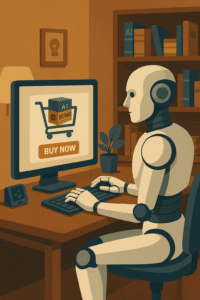
  • The eCommerce Search Box is Dead – Agentic Commerce is Here

    The eCommerce Search Box is Dead – Agentic Commerce is Here

    TL;DR — The Takeaway

    eCommerce is moving from searching for products to asking an AI assistant to solve a shopping problem. The search box won’t disappear overnight, but the first decision may soon happen before a buyer visits your store. For sellers, the challenge is bigger than ranking for keywords: will an AI shopping agent find your products, understand your offer, trust your business and include you in the shortlist?

    For years, we’ve trained online shoppers to do one thing: find the search box. Type in a product name, hit Enter, and work your way through pages of listings, advertisements, comparisons and reviews. The customer does the searching. The customer does the sorting. And hopefully, somewhere along the way, the customer finds us.

    We eCommerce sellers have built entire marketing strategies around that little box. Keywords, SEO, product titles, sponsored listings and pay-per-click campaigns all help determine who gets seen. There is a tremendous amount of money riding on where a product appears in those results.

    But what happens when the customer doesn’t start with a search box? What happens when they simply tell an AI assistant what they want and let it do the shopping research? That’s the change I believe we’re watching unfold, and it could reshape eCommerce.

    From Typing Keywords to Having a Conversation

    Imagine somebody wants a new office chair. Today, they might search for “best office chair,” open a dozen tabs, read reviews, compare prices and try to figure out which specifications actually matter.

    Now imagine saying, “Find me a comfortable office chair for eight-hour workdays. I need good back support, it has to fit a small office, my budget is $300, and I’d like it delivered by Friday.” That’s no longer just a keyword search. It’s an assignment.

    An AI assistant could ask a follow-up question, compare suitable products and show a handful of recommendations, complete with the reasons each one fits. Instead of making a shopper hunt for answers across multiple websites, it could bring the relevant information together in one conversation.

    We can already see the early pieces arriving. On April 28, 2025, ChatGPT introduced richer shopping results featuring product information and links to merchants. On May 1, Google expanded access to its experimental AI Mode in Search Labs, including more conversational ways to explore products and compare options. Neither announcement means the search box has vanished or that every purchase is autonomous. They show where product discovery is beginning to move.

    What Makes Agentic Commerce Different?

    A chatbot that answers a product question is helpful. An AI shopping agent takes the idea further. It may be able to understand what a customer needs, research alternatives, compare the total cost, check availability and, eventually, complete certain purchasing tasks with the customer’s permission.

    Think about routine purchases. Maybe you buy the same household supplies every month. Do you really want to search, compare and reorder them every time? An agent that understands your preferences could check whether the usual product is available, see if the price is reasonable and prepare the order for your approval.

    The opportunity goes beyond convenience. Over time, an agent might learn which brands you prefer, what sizes fit, which delivery options work for you and when you’re willing to spend more for quality. That’s a very different shopping experience from being shown the same generic results as everyone else.

    Of course, the technology still has to earn that trust. Recommending an item is not the same as being authorized to spend someone’s money. Errors in product specifications, prices or inventory can lead to a bad purchase just as quickly as an impatient human shopper can. But as the tools improve, I expect consumers to become more comfortable delegating parts of the process.

    The Biggest Change: Who Makes the Shortlist?

    This is the part that should get the attention of every eCommerce seller.

    In traditional search, we’re competing to get the customer’s click. We want to appear on the first page, win a sponsored position or convince somebody to visit our store. But if an AI agent does the first round of research, the shopper might see only three or four recommended products.

    If your product isn’t considered by that agent, you may never get the opportunity to make your sales pitch. The customer won’t necessarily know your listing exists. They won’t have to scroll past it. They may never visit the search results page at all.

    That doesn’t mean SEO is dead. Far from it. Search visibility, strong product information, credible reviews and a real reputation can all help make a seller discoverable. But the goal is expanding from “How do I get ranked?” to “How does an assistant understand what I sell, and why would it recommend me?”

    And there’s another interesting wrinkle. The “best” product isn’t automatically the cheapest or the most popular. A good shopping agent could weigh the customer’s actual priorities: quality, compatibility, shipping speed, return policies and total delivered cost. Sellers need to be able to demonstrate those advantages, not merely claim them.

    What eCommerce Sellers Need to Prepare For

    1. Product Data That Actually Answers Questions

    If an AI agent is comparing products, it needs facts. Detailed specifications, model numbers, dimensions, compatibility, variations, clear photographs, accurate pricing and understandable descriptions all become valuable. A listing that says “high quality” without explaining what makes it different isn’t giving the agent much to work with.

    This is where clean catalog data, structured information and reliable product feeds could matter even more. The information has to be available in places the shopping systems can use. You can’t expect an agent to recommend details about your product that it can’t find or verify.

    2. Inventory and Fulfillment That Can Keep a Promise

    An agent may find the perfect product, but if it’s out of stock or can’t arrive when promised, it’s not the right answer. I expect availability, shipping times and fulfillment reliability to weigh heavily in many purchasing decisions.

    For sellers, that means accurate inventory across channels, dependable fulfillment and timely updates. Predictive inventory tools may help anticipate demand, but there is no substitute for knowing what you have and delivering what you sold. We’ve learned that lesson in eCommerce plenty of times already!

    3. Pricing That Is Competitive AND Profitable

    Shopping agents could make price comparisons faster and more transparent. They may consider not just an item price but shipping charges, delivery speed, return policies and seller reliability. That could create pressure for more responsive pricing and better analysis of competing offers.

    I can see dynamic pricing and real-time data becoming useful tools here. But sellers shouldn’t blindly race to the bottom. Being selected by an AI agent doesn’t do you much good if you lose money on every order. Know your margins, including marketplace fees, fulfillment expenses and the cost of returns.

    4. Systems That Can Communicate with New Shopping Channels

    As agentic commerce develops, merchants may need to share product and availability information through feeds, integrations or APIs that different shopping platforms can understand. Some businesses will need more advanced connections as assistants gain the ability to take actions on customers’ behalf.

    That doesn’t mean every seller needs to rush out and build an expensive AI integration today. I’d start by making existing product information accurate, organized and accessible. Then I’d watch which new channels are actually driving qualified customers and useful sales.

    5. A Reputation an Agent Can Trust

    Reviews, seller history, clear policies and consistent service have always helped people make purchasing decisions. I believe they could become even more important when an assistant is evaluating competing merchants on the shopper’s behalf.

    The key word is real. Authentic reviews and dependable service beat manufactured praise. An agent may not always judge every source correctly, but misleading descriptions and fake testimonials are a poor foundation for any eCommerce business.

    What Happens to SEO and Pay-Per-Click Advertising?

    I don’t believe we’re looking at the instant death of SEO or PPC. We’re looking at a possible change in what those disciplines are trying to accomplish. Keywords have been the foundation of many advertising campaigns because they’re a useful signal of what a shopper wants. AI assistants can work with a richer set of signals: intent, context, preferences and constraints.

    Advertising platforms are already using automation and machine learning in bidding and targeting. As shopping becomes more conversational, I expect marketers to pay closer attention to the customer problem behind the search, not just the phrase that was typed. Contextual and predictive targeting could grow in importance, and ad placements may evolve alongside new shopping experiences.

    That said, I wouldn’t shut off a profitable PPC campaign because somebody announced the future of agentic commerce. Keep measuring what produces profitable transactions. Test new discovery channels, watch changes in traffic and conversion, and be ready to adjust when buyer behavior actually changes.

    Five Things I’d Do Right Now

    If I were reviewing an eCommerce operation in May 2025, I wouldn’t begin with some giant AI transformation project. I’d start with the basics that make the business easier for both shoppers and shopping systems to understand.

    • Audit the product catalog. Start with your best-selling SKUs. Fix incomplete descriptions, missing attributes, weak photos and incorrect variations.
    • Make the real offer easy to compare. Show price, availability, shipping details, compatibility, warranty information and return policies clearly.
    • Protect your reputation. Earn genuine reviews, resolve customer problems and keep the promises you make.
    • Measure the economics. Know your real transaction profitability before using discounts or automated pricing to win more orders.
    • Experiment with the tools customers are starting to use. Try shopping-related AI searches in your category. See which products appear, what information is missing and where your listings could improve.

    I’d also keep an eye on APIs, product feeds and emerging agent integrations. There’s plenty of opportunity to innovate, but the right time to invest is when you understand the problem you’re solving.

    The Search Box Is Dead. Long Live the Customer.

    Maybe my headline is a little dramatic. I don’t expect every search field on every retail site to disappear tomorrow. People will still browse for fun, compare products themselves and shop the way they’ve always shopped.

    What I do expect is that more customers will start by describing a problem rather than typing a product keyword. An AI assistant may do the early research, narrow the choices and someday handle much more of the transaction. The merchant will still have to provide the right product, at the right value, and deliver what was promised.

    The future of eCommerce may be less about winning the search box and more about earning a place in the recommendation. That’s a meaningful shift, and I think it’s worth preparing for now.

    So here’s my question: if a customer asked an AI agent to find the best solution in your category, would it find your business—and would it have enough reason to recommend you?

    Further Reading

    Google: Try AI Mode in Search Labs — May 1, 2025 · TechCrunch: ChatGPT adds shopping features — April 28, 2025


    Disclosure: AI helped generate this blog post.