

TL;DR — The Takeaway
AI assistants are beginning to change how people shop. In May 2025, ChatGPT can help discover and compare products, but its new shopping results still direct buyers to merchants to complete purchases. I believe more capable agents will eventually handle more of that work. For merchants, the preparation starts with accurate product information, trusted offers, and profitable fulfillment.
What if you could tell ChatGPT what you wanted to buy, give it a budget, and let it handle most of the shopping? No bouncing between a dozen websites. No trying to remember which store had the best shipping offer. Just a conversation about what you actually need.
That’s the direction I find exciting about agentic commerce. I’ve watched eCommerce grow from relatively simple listings and search boxes into sophisticated marketplaces that know a remarkable amount about what shoppers want. AI could be another major step in that evolution—because the customer may eventually delegate more of the work instead of doing every comparison personally.
My headline says ChatGPT will buy your items for you, and I chose that future tense deliberately. As of May 9, 2025, ChatGPT has newly expanded shopping search results, but it does not routinely complete checkout inside ChatGPT. Customers are still sent to a merchant’s website to finish purchasing. The big opportunity is where this process might go next.
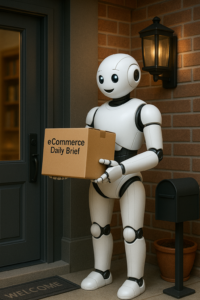
What Agentic Commerce Actually Means
Agentic commerce describes shopping tasks performed with help from AI agents that can interpret a goal, take steps toward it, and potentially act on a customer’s behalf. It goes beyond simply displaying search results. A shopper can explain the outcome they want, and the system can do some of the research, comparison, and decision support.
Imagine asking, “Find me a reliable laptop for travel, under $1,000, with good battery life. I need it delivered before Friday.” A traditional search engine might hand back pages of laptops and reviews. An AI assistant could help narrow that group using the stated requirements, point out compromises, and show a manageable set of options.
It’s useful to separate shopping assistance from autonomous purchasing. Finding an item, comparing offers, and preparing a recommendation are different from receiving permission to spend money. Payment authority, privacy, returns, seller reliability, and confirming the exact item all become more important as AI systems move closer to checkout.
What ChatGPT Shopping Can Do in May 2025
On April 28, OpenAI introduced shopping enhancements to ChatGPT Search. Customers asking about categories such as fashion, beauty, home goods, and electronics can receive visual recommendations with product photos, review information, prices, and links to retailers. The rollout provides a much richer experience than a plain conversational answer.
What it doesn’t mean is that ChatGPT is already negotiating every deal or independently placing purchases. Reporting at launch makes clear that the actual transaction still happens on the merchant’s website. That’s a crucial distinction. We should be excited about what’s emerging without pretending the entire future has already arrived.
I think the real change is how the question is asked. A customer can explain a complicated need in ordinary language instead of figuring out which keywords will produce the right result. That gives the assistant more context to work with, and it puts a premium on useful information about products.
A Shopping Journey That Could Become Very Different
Here’s how I see this developing. The customer starts by describing the problem or desired outcome, not necessarily a specific item. The AI assistant uses available information to evaluate options, then presents a smaller group with reasons for each recommendation. The shopper can ask follow-up questions or change the budget without starting again.
- Discover: Identify products that genuinely match a shopper’s needs, budget, and constraints.
- Compare: Look at specifications, reviews, delivery promises, and total cost instead of just a promotional headline.
- Recommend: Explain the tradeoffs—why one product is a better value and another may be worth paying more for.
- Confirm: Let the customer inspect the exact variant, seller, availability, price, and return terms.
- Purchase: Eventually, with proper permission and safeguards, an agent might help complete checkout and handle follow-up tasks.
I can imagine the convenience of an assistant also watching an order, asking for an exchange if the size is wrong, or handling a routine reorder. But those are potential future workflows, not features I’m claiming are all available today. The more responsibility we hand to an assistant, the more the customer must remain in control.
Could AI Negotiate Better Prices?
One idea I explored in the original article is agents negotiating with retailers or identifying the best deals automatically. It’s certainly interesting to imagine a buying agent and a selling agent discussing a bulk discount or an acceptable substitute. But as of May 2025, that isn’t a universal ChatGPT shopping capability.
The practical part is closer to home: an assistant may help compare advertised prices and understand the total delivered cost. That can already change how merchants compete. A $49 product with a $15 shipping fee may not look so attractive next to a $54 product with reliable delivery included.
My take: I’ve always believed the economics matter at the transaction level. A clever AI shopping experience won’t rescue a seller who doesn’t understand product margin, shipping, fees, and returns. AI may make comparisons more transparent, and that makes knowing your numbers even more important.
What Happens to Online Advertising and Product Discovery?
Here’s where merchants should be paying attention. We’ve spent years buying search ads, optimizing product pages, and working to get shoppers onto our websites. What if the first meaningful product comparison now takes place inside an AI conversation rather than on our own storefront?
I wouldn’t declare search advertising or SEO dead. Those channels still matter. But a conversational shopping assistant may rely on product specifications and customer needs that don’t fit neatly into a few traditional keywords. A retailer needs to make it easy for systems and shoppers to understand what a product actually does.
That means accurate product names, variations, dimensions, features, images, prices, availability, reviews, and shipping information. Structured product data and reliable product feeds can help compatible search and shopping systems interpret those details. None of that guarantees inclusion in an AI response, but it improves the underlying information a recommendation might use.
Three Things I’d Ask Every eCommerce Merchant to Review
- Is our product information complete? If a customer needs an ergonomic chair for a small office, can our product listings actually explain dimensions, support, materials, and delivery options?
- Does the offer inspire confidence? Clear policies, honest photographs, useful customer feedback, and accurate inventory matter regardless of who recommends the item.
- Can we profitably deliver the promise? If an assistant highlights our product as the best choice, can we ship it on time and handle the transaction, service, and potential return without losing money?
I would also test how existing AI shopping tools respond to real questions your customers ask. Don’t treat one answer as proof of some secret ranking formula. Use it to learn which parts of your catalog are understandable and which leave important questions unanswered.
The Merchant Still Has to Win the Customer
One thing I don’t want to lose in the excitement over autonomous shopping is the human side of the transaction. Somebody still has to trust that the product is what it claims to be. Somebody still has to receive it, use it, and decide whether the experience was good enough to buy again.
AI might become the front door to a purchase, but the merchant remains responsible for the promise behind that purchase. A good description, a fair price, reliable fulfillment, and responsive service are just as relevant if the buyer arrives through an AI recommendation instead of a search engine.
To me, that is the exciting part of this shift. The interface can change dramatically while the fundamentals of running a good eCommerce business remain recognizable. The opportunity is to make those fundamentals easier for customers—and their assistants—to see.
My Take: Prepare for the Direction, Not Just Today’s Features
I think we’re looking at the beginning of something important. As AI becomes more capable, shopping could become less about finding products and more about describing the result we want. That may help buyers discover good merchants they would never have found through an ordinary keyword search.
But I’m not ready to tell sellers that ChatGPT will magically handle every order next week. There are legitimate questions about accuracy, authorization, payments, privacy, and the ability to resolve a problem after checkout. Those are business challenges, not just technical problems.
My advice is to start with what you control. Build better product data, understand your customers, and make sure each order is economically sound. If an AI assistant eventually decides which products to recommend—and perhaps which orders to place—would your business be ready to earn that sale?
Sources and Further Reading
WIRED — OpenAI adds shopping to ChatGPT, April 28, 2025 · Search Engine Land — ChatGPT Search shopping features, April 28, 2025
Disclosure, AI helped write this article